
You know how hard the attention-grabbing game is getting when dancing on TikTok doesn’t even register.
And you’re having a “tear your hair out moment” because you know your ideal clients are searching for you. You also know not enough of them are finding you.
But we’re going to change that. And we’re using AI to help.
You might think best way to get on your prospects’ radar is to start is with their pain points. You know – those big umbrella terms that describe the challenges they’re looking to solve.
But there’s just one problem:
They’re overused.
They’re vague and unfocused.
And they cover such a wide swath, they just don’t break through the noise.
But there are three elements you can use instead to craft laser-targeted nuggets that help your messaging rise to the top because it lets your market know: “You’re talking to me!”
What they are – Why they work:
They’re called obstacles, complaints and situations.
You see, the pain points so many of us use in our messaging rate a ZERO on the sizzle scale:
‘Can’t lose weight.’
‘Can’t find love.’
‘Can’t make money.’
They’re true … but they don’t resonate.
They’re fact-based … but they don’t fly off the page.
There’s no drama. There’s no emotion. They’re not personal. There’s no urgency to find a way out.
They are expansive “umbrella” problems which feel vague, impersonal, and dull because we’ve heard them a thousand times.
Obstacles, complaints and situations are just the opposite.
They are specific and unique to your ideal client. The obstacles to a CEO losing weight are going to be very different from the obstacles for a single mom.
They are story-based. Stories ring true because they are personal. And they are not just statements of fact. They involve us emotionally because they attach a narrative to the problem. And when they are accurate they connect like almost nothing else.
They speak to a person’s actual experience. So instead of feeling like the same old marketing spiel, they move you to say, “That sounds like me!”
It’s this targeting, personalization and raising the emotional stakes of the problem that can really make you and your messaging stand out. And elevate you in the eyes of your audience.
So how can we apply each of them and make them work?

OBSTACLES:
An obstacle is the specific thing that defeats your ideal prospect time after time. It looms large and is what stands between where they are and their goal or dream.
It’s the thing that moves people to say, “If I could only get this solved, I’d be on my way!”
Identifying obstacles skyrockets interest and engagement for a number of reasons.
1. They are specific and painful.
While not having enough leads is frustrating, not having enough leads after spending $5,000 on Facebook ads is painful.
2. It’s the big domino that needs to fall.
If the obstacle is seen as the crucial thing standing in the way of success, there’s a lot if interest in getting it out of the way.
3. The obstacle connects me to YOU.
I am much more likely to connect with a specific obstacle that’s connected to me. And if I feel you truly understand THAT’S MY OBSTACLE, and you know the way through it … guess who gets my business? Because you’ve been able to identify it, you must be the one to guide me to the other side.
It’s the TRUE source of my distress. So removing it is the TRUE path to my goal.

COMPLAINTS:
Complaints are powerful because they are the struggles that give rise to voicing my discomfort. They are no longer something casual, something you’re putting up with that fades to the background. A complaint means it has your full attention.
And when something has the full attention of your ideal client, it becomes engagement messaging gold.
Most complaints are also stories. There is the person who is complaining, there is the problem they are complaining about and there is usually a hint of the circumstance which prompted the complaint.
It’s not just “I wish I my ads got more leads” it’s “If Facebook changes their ads interface one more time I’m going to jump out a window!”
The difference is palpable.
The emotion behind a complaint pushes it to the forefront of what your market is willing to take action on. And when you’re the one who captures that complaint, in words THEY WOULD USE, it’s likely they will be taking that action with you.

SITUATIONS:
Situations create an instant and powerful bond with your market because they not only connect with the exact experience your ideal client is having. It connects with the situations surrounding that experience.
So they feel seen, heard, understood.
You are no longer a marketer calling from the distance, trying to sell them something.
You are their ally. Their advocate. Their confidant. You understand the same things, you believe the same things and want the same things.
You are not trying to drag them across the bridge to an offer you’re trying to sell. You are walking alongside them towards the outcome they want most.
Situations reveal that you are not just telling them you know what they are going through. They demonstrate you know what they are going through. So you become a much more trustworthy source of the solution.

SO HOW DO I COME UP WITH THEM?
This is where AI can really come to the rescue!
If you knew your market’s biggest struggles and how they talk about them, this wouldn’t be an issue. But most of us don’t.
So instead taking weeks to send a survey to your list, or eavesdropping on your ideal prospects in the online groups where they hang out – AI can deliver on-target specifics in just minutes.
Just feed this into your favorite AI:
What you do (the problems you solve, the solutions you deliver)
.
Who you do it for (your market – the more specific you can get, the better)
Since your market may have many things they’re struggling with, choose the biggest one to start with.
Then ask the AI:
Give me a list of 10 obstacles my market is facing trying to move through that specific struggle..
.
And make sure you direct it to use the language they themselves would use based on the market description I just gave you.
After it returns those results, ask:
Give me a list of 10 complaints my market is voicing trying to move through that specific struggle.
.
Direct it to voice the complaint as if your ideal client were saying it out loud, and you’re in the room hearing it.
After it returns those results, ask:
Give me a list of 10 situations my market is facing trying to move through that specific struggle.
.
Don’t just describe it. Give the person experiencing the situation a name and describe that situation in detail – including the emotions they are experiencing.
.
Example: “Jenny looked at the clock, knowing she would be up all night (again!) to really nail this presentation. ‘I have to find a way to do this faster!’ she said to herself.
Then … choose a second struggle they are having and run through the series again.
Not every result will be a masterpiece. But the speed and accuracy with which AI returns some real gems you can use in your messaging saves you a boatload of time and effort you can then devote to making your offers more profitable.
Wrapping it all up:
The fact is: Using pain points in your messaging just the start. They’ll get you to first base. But they won’t get you home.
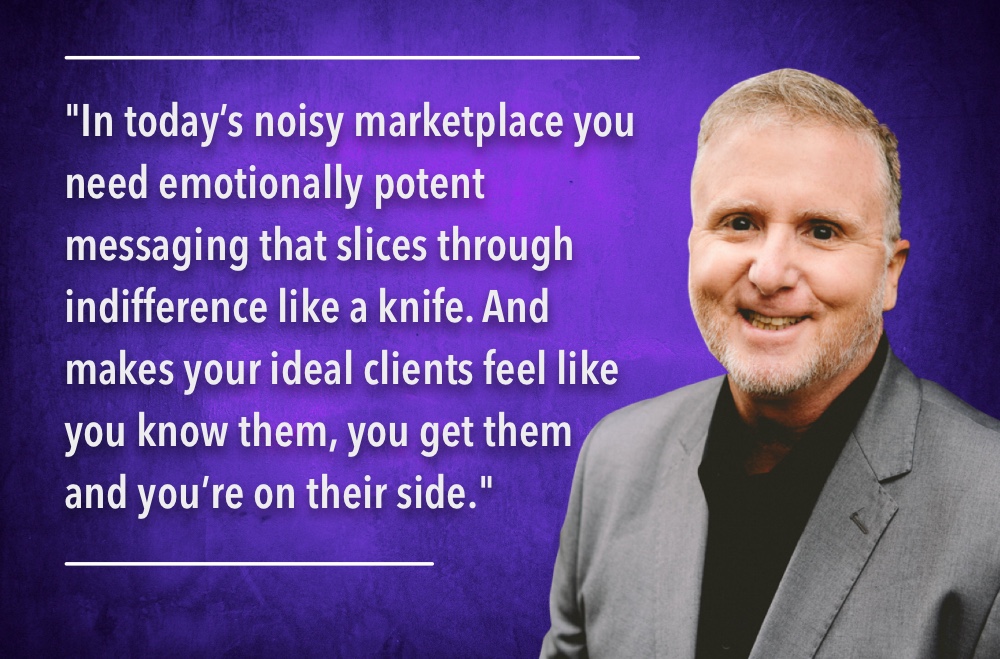
In today’s noisy marketplace you need emotionally potent messaging that slices through indifference like a knife. And makes your ideal clients feel like you know them, you get them and you’re on their side.
And AI can help you get the nuggets you need faster.
Dialing in the obstacles, complaints and situations your prospects experience as they navigate their way towards their goals is one of the impactful, effective ways to distinguish your offer and make them listen to you. When there are 1000 others competing for their attention.
Stop throwing ‘pain points’ out into the void in hopes your market gets it.
Start connecting with the emotional experience their challenge evokes using your storehouse of obstacles, complaints and situations and watch them respond.